
Arizona’s natural environment and water resources are central to the state’s quality of life and economy. Managing these assets requires balancing the needs of a growing population with the protection of finite natural systems. Water supply, air quality, and wildfire risk remain key environmental factors shaping Arizona’s long-term sustainability and community well-being.
Arizona’s Environment & Water Landscape
Overview of Arizona’s environment & water landscape, including contextual factors, shared public priorities, and data that show where the state stands today.
Each topic page offers an overview of an issue Arizonans identify as a statewide priority, drawing on both public opinion and outcome data from sources such as the Gallup Arizona Survey, the Arizona Voters’ Agenda, and the Arizona Progress Meters. Additional data and trend details are available in the Searchable Data Library for deeper exploration.
Arizona’s Current Environment & Water Landscape
Arizonans in Active Management Areas use an average of 131 gallons of water per day for residential uses.
5% of Arizona’s clean water in Active Management Areas — which are strictly controlled — is lost due to inefficient water infrastructure.
As of 2023, 91% of Arizona’s population lives within protected water areas like Active Management Areas, which have expanded regulations to support planned growth.
Arizona has an average of 3.7 acres of open space for every resident as of 2024.
Factors Unique to Arizona
Arizona’s environment and water resources are shaped by a combination of geographic, climatic, and population factors that define life in a desert state. Limited water supplies, air quality concerns, and the stewardship of vast public lands all influence Arizona’s long-term sustainability. Together, these dynamics highlight the balance required to support growth while protecting the natural systems that sustain communities statewide.
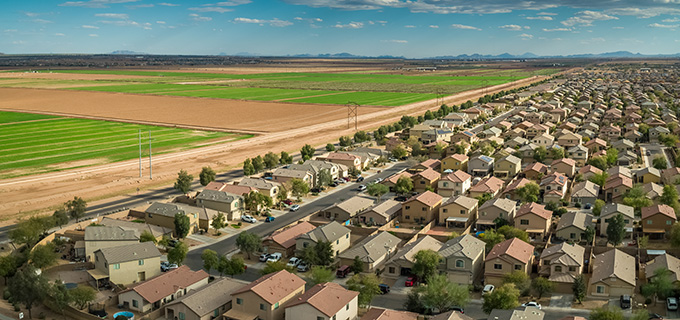
Rapid Population Growth
Arizona’s fast-growing population increases demand for limited natural resources, including water, land and minerals. Growth also places added pressure on wildlife, natural habitats, and ecosystems that support the state’s environment and economy.
Rapid Population Growth
Arizona’s fast-growing population increases demand for limited natural resources, including water, land and minerals. Growth also places added pressure on wildlife, natural habitats, and ecosystems that support the state’s environment and economy.
What Arizonans Prioritize
Arizona voters recognize that water is an essential resource for living in the desert and that securing long-term water supplies should be a priority for state leaders. Across political parties and demographics, Arizonans want to protect water sources and preserve the environment.
Securing Arizona’s Water Future
Arizonans show broad agreement on the importance of protecting the state’s water resources. Across regions and affiliations, voters strongly support efforts to preserve rivers, natural areas, and wildlife, and to secure Arizona’s long-term water future.
Securing Arizona’s Water Future
Arizonans show broad agreement on the importance of protecting the state’s water resources. Across regions and affiliations, voters strongly support efforts to preserve rivers, natural areas, and wildlife, and to secure Arizona’s long-term water future.
See All the Most Recent Public Opinion Research:
Indicators to Drive Action
Measuring environmental outcomes over time helps reveal how water use, land conditions, and natural resource availability are changing across Arizona, providing insight to guide decisions that shape the state’s future. These indicators represent ways to describe and track environmental conditions in relation to the shared priorities Arizonans have identified for sustainability and long-term resilience. When measured consistently, these data help communities, policymakers, and stakeholders understand what’s changing, inform decisions to manage resources responsibly, and track progress toward maintaining a healthy environment for future generations.
Likelihood of Water Shortage
The likelihood of a water shortage from the Colorado River is measured by the Bureau of Reclamation, based on annual projections of water levels in Lake Mead. If the projected level falls below 1,075 feet of elevation above sea level, a shortage is declared and water deliveries are reduced to Arizona and other states.
- Why it matters: Lake Mead is the reservoir that supplies Arizona’s water from the Colorado River, which accounts for about 35% of the state’s total annual use.
Likelihood of Water Shortage
The likelihood of a water shortage from the Colorado River is measured by the Bureau of Reclamation, based on annual projections of water levels in Lake Mead. If the projected level falls below 1,075 feet of elevation above sea level, a shortage is declared and water deliveries are reduced to Arizona and other states.
- Why it matters: Lake Mead is the reservoir that supplies Arizona’s water from the Colorado River, which accounts for about 35% of the state’s total annual use.
Find More Tools to Strengthen Your Story
Independent Experts
Connect with Arizona-based experts from across the state ready to share their own perspectives and insights — on the record or off.
Search our Experts DirectoryInformational Sessions
Join online, in-person, and hybrid events — available exclusively to verified members of the media — that provide early access to new data and opportunities to hear from experts who can explain and explore Arizona’s most complex and evolving issues.
Explore the Sessions