
Arizona's education system spans three interconnected stages — early learning, K-12, and post-secondary — each governed independently and shaped by diverse student needs, funding structures, and educational policies. Arizona is known for its expansive school choice, decentralized governance, and longstanding challenges with funding and equity.
Arizona's Education Landscape
Overview of Arizona’s education landscape, including contextual factors, shared public priorities, and data that show where the state stands today.
Each topic page offers an overview of an issue Arizonans identify as a statewide priority, drawing on both public opinion and outcome data from sources such as the Gallup Arizona Survey, the Arizona Voters’ Agenda, and the Arizona Progress Meters. Additional data and trend details are available in the Searchable Data Library for deeper exploration.
Arizona's Current Education Landscape
1,113,102 K-12 students at public district and charter schools statewide in 2024.
32% 3- and 4-year-olds enrolled in high-quality early learning programs in 2023.
66,846 teachers across public and private settings in 2024.
624,719 post-secondary students in Arizona universities, colleges, and training programs in 2024.
49% of K-12 public school students in 2024 qualified as economically disadvantaged.
Factors Unique to Arizona
Arizona's education system reflects innovation, flexibility, and fragmentation. Its defining characteristics create both opportunity and challenge in delivering quality education statewide and shape how families, educators, and policymakers think about access, funding, and performance across the state’s education system.
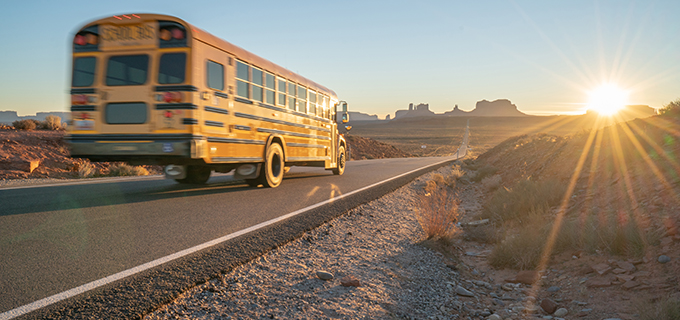
School Choice is Built Into the System
Arizona’s long-standing open enrollment policy allows families to choose schools outside their home district boundaries — a foundational difference from most other states and the basis for Arizona’s broad culture of school choice. Since the 1990s, Arizona has expanded these options through public charter schools and Education Savings Accounts (ESAs), creating one of the most flexible K–12 systems in the nation.
Today, families can choose among public district, public charter, private, and homeschool options. ESAs provide public funds families can use for private school tuition, homeschooling, or educational materials. While ESAs have drawn national attention, open enrollment remains the most widely used form of school choice. Access to school choice options can depend on practical factors like transportation and availability.
- Open enrollment enables students to attend schools across district lines.
- 90% of Arizona students attend public school through districts (69%) and charters (21%).
- Originally designed for students with special needs, ESAs have since expanded to universal eligibility.
School Choice is Built Into the System
Arizona’s long-standing open enrollment policy allows families to choose schools outside their home district boundaries — a foundational difference from most other states and the basis for Arizona’s broad culture of school choice. Since the 1990s, Arizona has expanded these options through public charter schools and Education Savings Accounts (ESAs), creating one of the most flexible K–12 systems in the nation.
Today, families can choose among public district, public charter, private, and homeschool options. ESAs provide public funds families can use for private school tuition, homeschooling, or educational materials. While ESAs have drawn national attention, open enrollment remains the most widely used form of school choice. Access to school choice options can depend on practical factors like transportation and availability.
- Open enrollment enables students to attend schools across district lines.
- 90% of Arizona students attend public school through districts (69%) and charters (21%).
- Originally designed for students with special needs, ESAs have since expanded to universal eligibility.
What Arizonans Prioritize
Center for the Future of Arizona’s statewide survey research shows strong, consistent support for ensuring every student in Arizona has access to a high-quality education. Across political, geographic, and demographic lines, Arizonans view public education as a cornerstone of community well-being. Voters emphasize investing in schools, expanding post-secondary access, and closing opportunity gaps to prepare all learners for success and strengthen Arizona’s future workforce.
High-Quality Education for All Students
Public education is viewed as a public good. Arizonans overwhelmingly support ensuring every school can meet high standards and many of their priorities emphasize the importance of foundational academic skills and outcomes.
High-Quality Education for All Students
Public education is viewed as a public good. Arizonans overwhelmingly support ensuring every school can meet high standards and many of their priorities emphasize the importance of foundational academic skills and outcomes.
See All the Most Recent Public Opinion Research:
Indicators to Drive Action
Measuring education outcomes over time helps reveal how students across Arizona are learning, progressing, and preparing for future opportunities. These indicators track key milestones — from early literacy and foundational math to high school graduation and postsecondary attainment — that together show how well Arizona’s education system is meeting the needs of all learners.
When viewed collectively, these measures help communities, educators, and policymakers understand where progress is being made, where gaps remain, and how access to high-quality learning can strengthen outcomes statewide.
The Arizona Education Progress Meter, developed by Center for the Future of Arizona and Education Forward Arizona, tracks these indicators and goals — identified through a two-year collaboration with hundreds of community and education leaders — and is widely recognized as the state’s key measure of educational progress.
Quality Early Learning
Tracks the percentage of 3- and 4-year-olds enrolled in high-quality early learning programs.
- Why it matters: These early experiences build the foundation for school readiness, literacy, and lifelong learning. High-quality programs are defined by standards for educator training, curriculum, and child outcomes.
Quality Early Learning
Tracks the percentage of 3- and 4-year-olds enrolled in high-quality early learning programs.
- Why it matters: These early experiences build the foundation for school readiness, literacy, and lifelong learning. High-quality programs are defined by standards for educator training, curriculum, and child outcomes.
Find More Tools to Strengthen Your Story
Independent Experts
Connect with Arizona-based experts from across the state ready to share their own perspectives and insights — on the record or off.
Search our Experts DirectoryInformational Sessions
Join online, in-person, and hybrid events — available exclusively to verified members of the media — that provide early access to new data and opportunities to hear from experts who can explain and explore Arizona’s most complex and evolving issues.
Explore the Sessions